
Defensible Space & Fire-Season Cleanup in San Bernardino
At the base of the mountains, clearing brush for defensible space is part of living here - and it produces far more debris than green-waste carts can handle.
In this guide
- Living at the wildland edge
- What defensible space means
- Why routine pickup isn't enough
- Timing it around fire season
- Keeping the green waste clean
- Sizing and placement
- Being ready
San Bernardino sits at the base of the San Bernardino Mountains and the edge of the San Bernardino National Forest, and that setting is beautiful and, in fire season, demanding. Clearing vegetation for defensible space is part of living here, and it produces a volume of debris that routine green-waste service was never designed to handle.
Living at the wildland edge
The foothill and mountain-adjacent neighborhoods around San Bernardino, Highland, Yucaipa and up toward the forest are in what fire authorities call the wildland-urban interface - where homes meet flammable vegetation. Southern California's fire seasons have grown longer and more serious, and keeping defensible space around a property is both prudent and, in many cases, required.
That work - cutting back brush, limbing trees, clearing dead vegetation - generates a lot of material in a concentrated push, usually in late spring and summer as fire season approaches.
What defensible space means
Defensible space is the buffer of cleared and managed vegetation around a structure that slows or stops the spread of fire and gives firefighters room to work. Creating it means removing dead plants, thinning brush, clearing vegetation away from the house, and keeping the immediate zone lean.
The result is a substantial pile of cut brush, limbs and dead vegetation that has to go somewhere - and it is far too much for a green-waste cart over a normal collection cycle.
Why routine pickup isn't enough
Routine green-waste pickup handles a normal week's clippings. A serious defensible-space clearance, or the aftermath of a tree removal, produces bulky vegetative debris in a volume that overwhelms the cart-and-cycle approach.
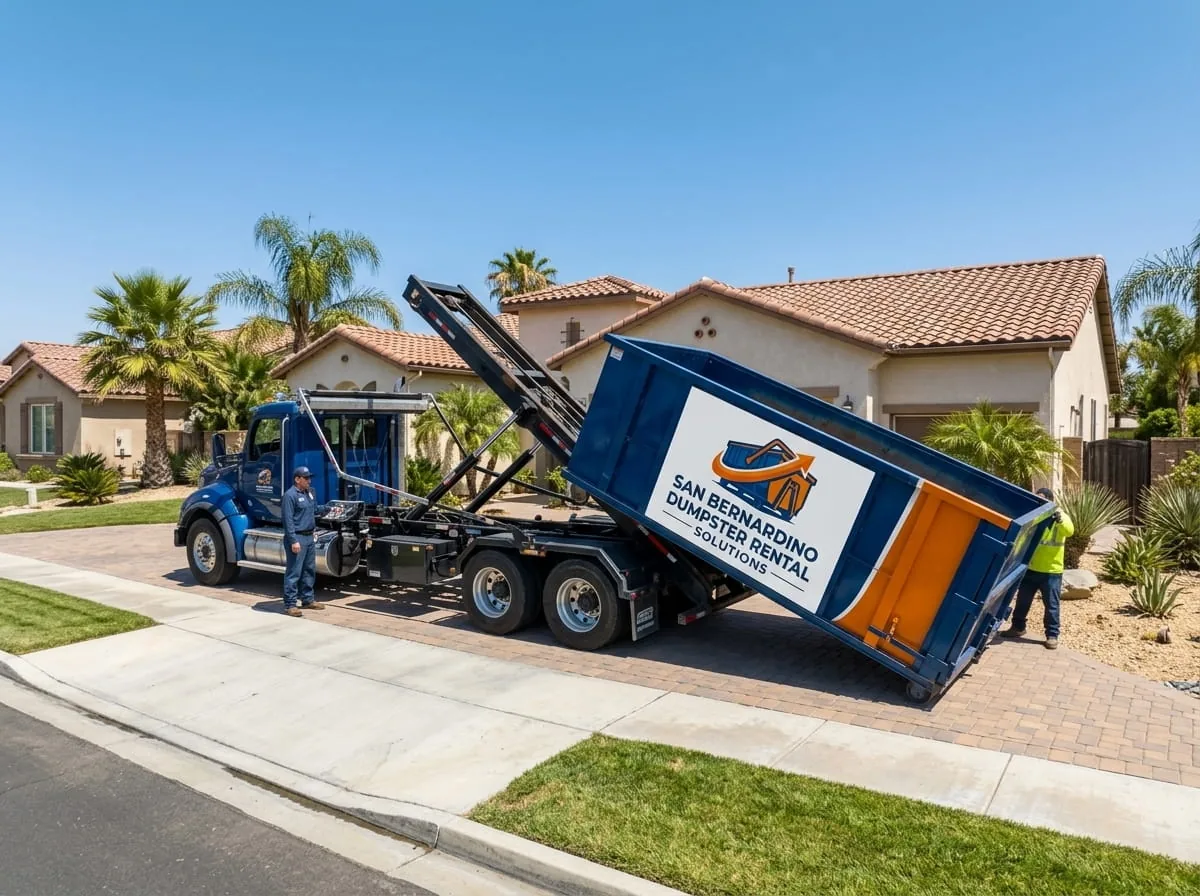
A roll-off is the efficient answer. Rather than filling carts over weeks and missing your window before fire season, you clear the property in one push and we haul it. For a real clearance, a 30 or 40 yard handles the bulky, light vegetation without needing a swap.
Timing it around fire season
The demand for this work is seasonal and it peaks hard. As fire season approaches, everyone in the foothills is clearing at once, and containers get tight across the Inland Empire.
The practical advice is to plan ahead. If you know you need to clear defensible space, call early in the season rather than in the crush. Being based locally, we understand the seasonal rhythm and can plan around it - but early callers get the easier scheduling.
Keeping the green waste clean
Clean green waste - branches, brush, limbs, trimmings - can be routed for composting and mulching rather than landfill, which is greener and counts toward diversion. Defensible-space clearance is usually almost all clean vegetation, which makes it ideal for that route.
The thing to avoid is mixing in fencing, lumber, dirt or general debris, which turns the clean green waste into mixed waste and loses the composting route. If the job also involves removing an old shed or fence, keep that material in a separate container.
Sizing and placement
For a typical defensible-space or land-clearing job - brush, limbs, dead vegetation - a 30 yard is the usual starting point, stepping up to a 40 for a large or heavily overgrown property.
Placement wants a firm spot, and in the foothills that often means dealing with slope. We plank to protect the surface as always, and on sloped lots we take extra care that the container and truck can sit and reach safely. Every load leaves tarped - important with light, loose vegetation.
Being ready
Fire season is not a surprise, even if any particular fire is. Know before it arrives that a local company can bring a container fast, handle the volume, and route the clean vegetation for composting. Clearing defensible space is one of the most useful things you can do for a foothill property, and handling the debris should be the easy part. Call early, and we will get a container there.
Book a container in San Bernardino
One flat rate covering delivery, seven days, pickup and disposal.
(909) 361-3356Questions readers ask about this
Can you handle a big defensible-space or brush clearance?
Yes - it's common work here at the base of the mountains. Cleared brush, limbs and dead vegetation are bulky and fill a 30 or 40 yard fast. Call early in the season, before the fire-season crush when containers get tight across the Inland Empire.
Can the cleared brush be recycled?
Yes, if it's kept clean. Clean branches, brush and trimmings route for composting and mulching, which counts toward diversion. Defensible-space clearance is usually almost all clean vegetation, so keep any fencing or lumber in a separate container.
What size do I need for defensible-space clearing?
Usually a 30 yard, stepping up to a 40 for a large or heavily overgrown foothill property. Vegetative debris is bulky but light, so it fills volume before it gets heavy.
Can you place a container on a sloped foothill lot?
Usually, with care. We plank on every delivery and judge whether the ground and approach are safe on a slope. Send a photo from the street and we'll tell you what fits.